Most recipes for glutinous sticky rice call for soaking the rice for several hours before cooking it. Fortunately, there is a better way. This recipe skips the soaking but still results in that distinctive tender chewy texture that pairs so well with the savory-sweet richness of the Chinese sausage. Given how easy this recipe is, you can readily make this dish for a weeknight dinner, dim sum at home or big celebrations like Lunar New Year.
- Prep Time:
20 mins - Cook Time:
40 mins - Total Time:
60 mins
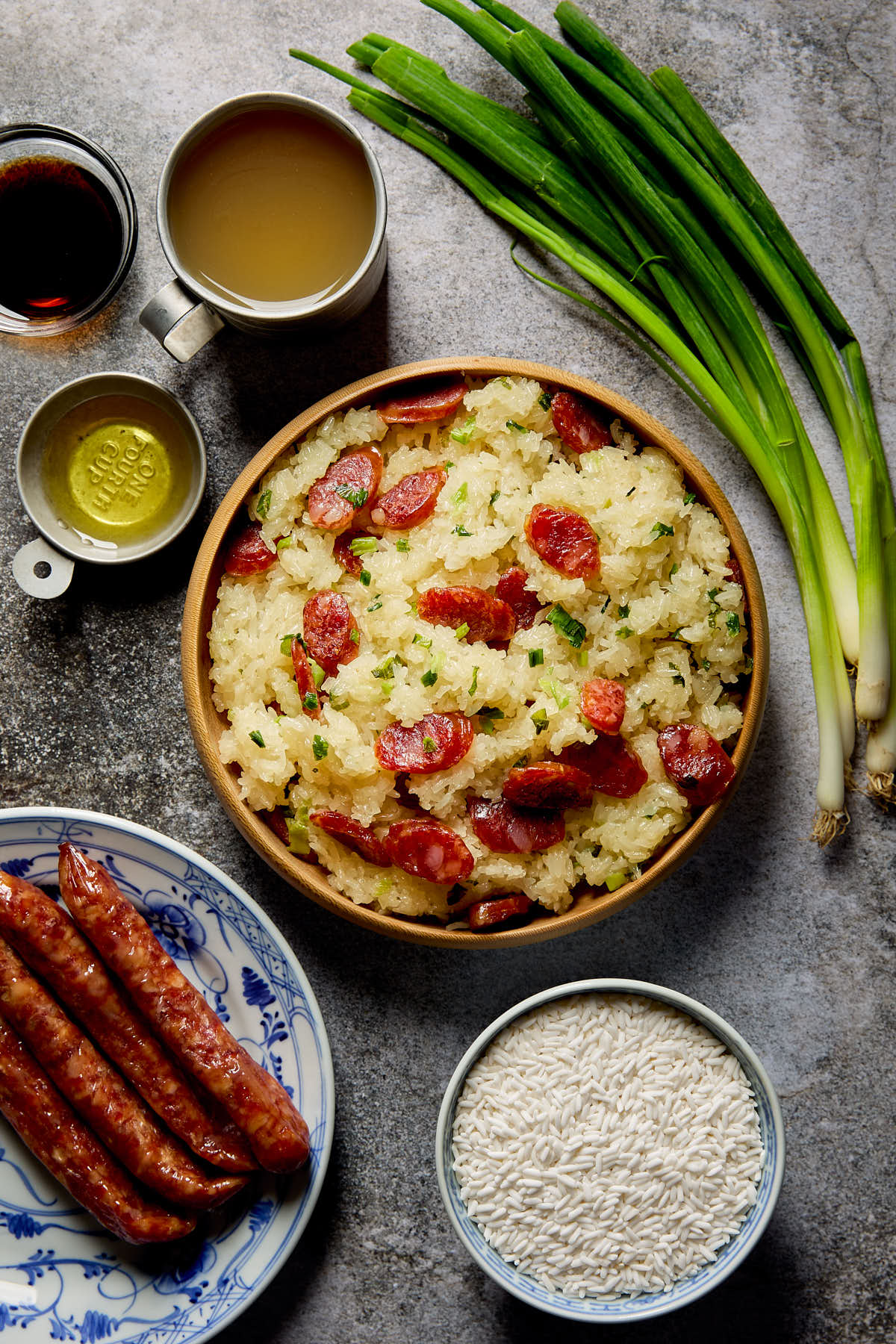
Vietnamese sticky rice
Along with Vietnamese soups, I consider glutinous sticky rice with Chinese sausage to be one of my favorite Vietnamese comfort foods. There is something about the chewy texture of the sticky rice and the savory-sweet fattiness of the Chinese sausage that brings me great joy. Fortunately, making sticky rice takes way less time to make than say Vietnamese chicken pho.
No soaking required
Almost every recipe I have seen for cooking sticky rice starts with soaking the rice for 2 hours at a minimum and up to overnight. This recipe does not require that kind of planning or time commitment. This recipe simmers the rice briefly in chicken stock before steaming it which yields the same tender and chewy texture without the long soaking time. I am grateful to my mother for teaching me this handy shortcut many years ago.
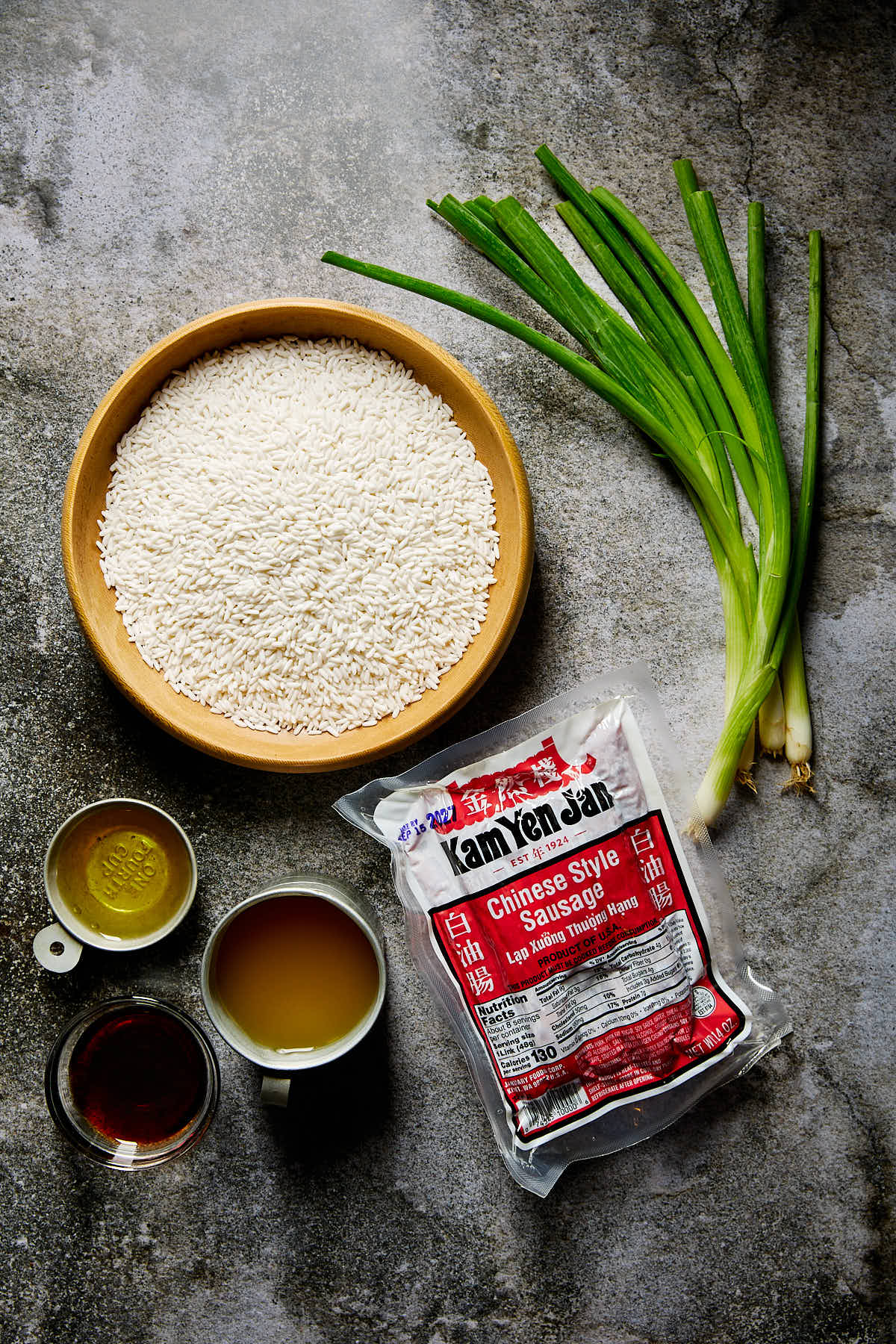
Use the right kind of rice
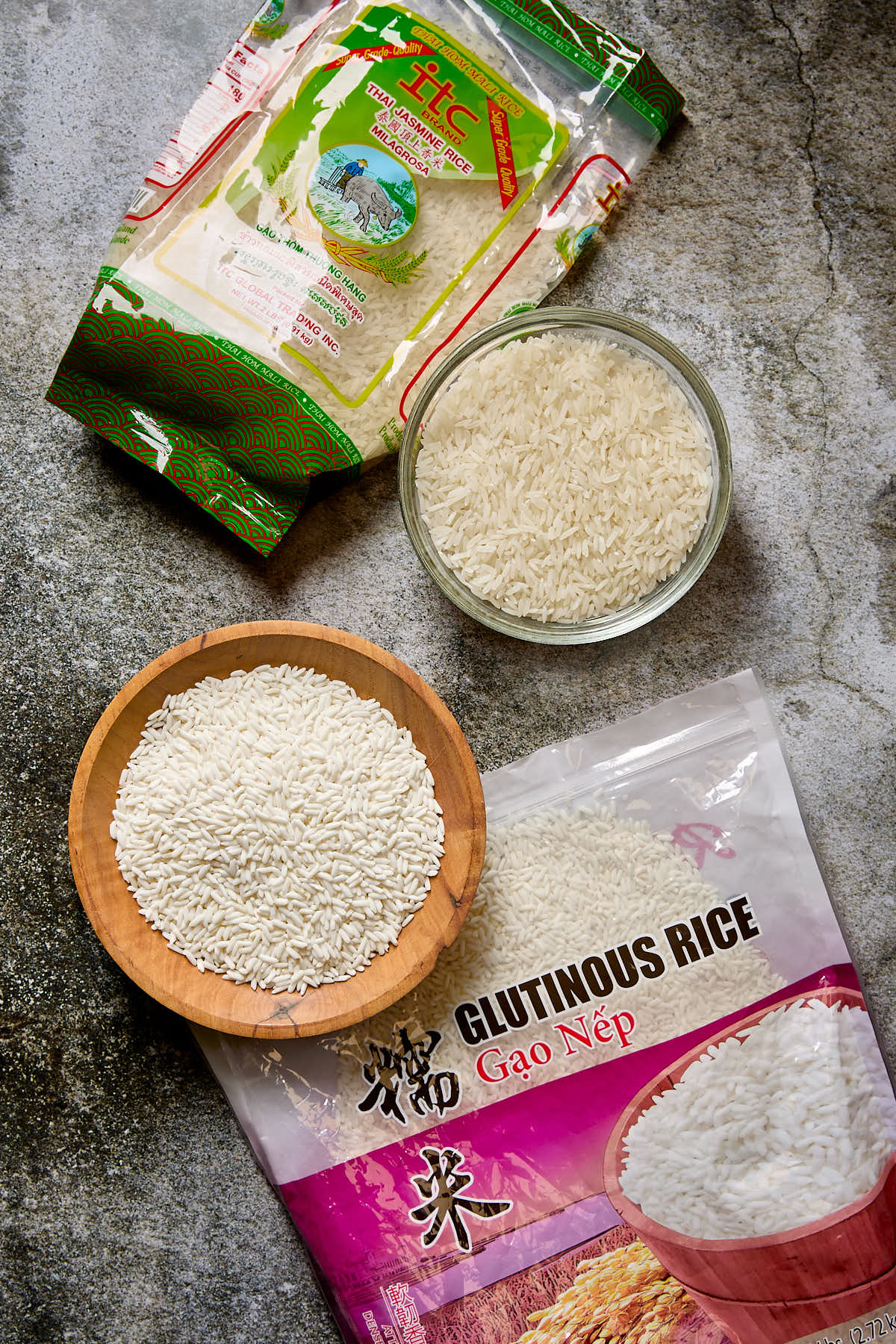
The most important factor for making successful Vietnamese sticky rice is using the correct variety of rice. The term sticky rice is confusing because some “regular” rice varieties get labeled as “sticky rice”. Therefore, I look for the words sweet rice, glutinous rice, or gạo nếp (Vietnamese for raw glutinous rice) on the bag. If the bag is clear, I check that the rice grains are an opaque chalky-white. Regular rice varieties such as jasmine, basmati, calrose, or sushi rice are more translucent and less white.
I should also note that there is a Japanese variety of glutinous rice (often referred to as mochi rice). Though mochi rice is a glutinous rice, it is a short-grain rice and for this recipe, a longer-grained rice is really what you want. This variety is grown in Southeast Asia and is often labeled as Thai sweet rice.
I have only been able to find glutinous rice at Asian grocery stores.
Steamer vs rice cooker
A steamer and a rice cooker can both cook sticky rice. However, if you are really looking for that perfect chewy texture that is characteristic of sticky rice, a rice cooker just can’t achieve what a steamer can. A rice cooker basically boils the rice which will yield a softer, fluffier texture. This is desirable for non-glutinous rice. However, glutinous sticky rice should be tender yet chewy. For that, a steamer works best. Steaming is also a more forgiving method of cooking sticky rice. There is no worry of using too much or too little water for the amount of rice you’re cooking and it’s nearly impossible to over-cook rice with a steamer.
For steaming sticky rice, I recommend using a stackable-style steamer basket (also called a steamer insert). I use a stainless-steel insert that fits in a 4 quart saucepan. I don’t recommend the collapsible-style steamer basket.
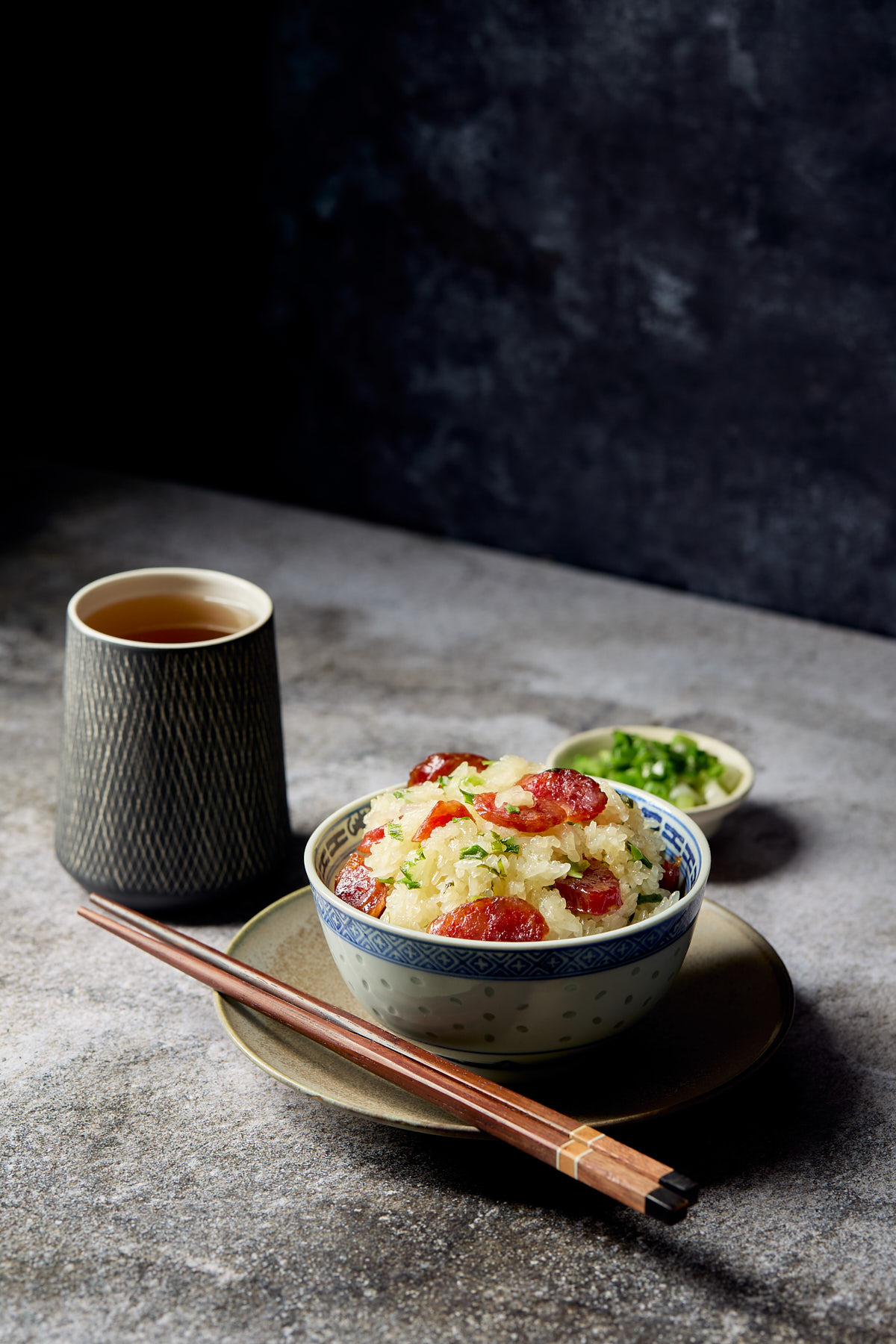
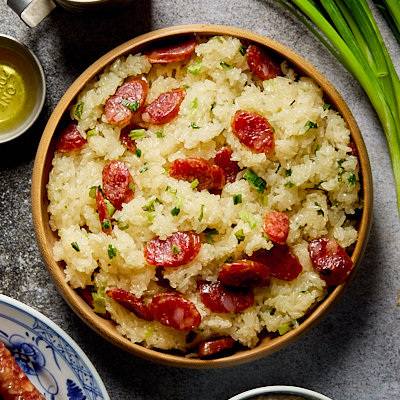
Vietnamese Sticky Rice with Chinese Sausage (Xôi Lạp Xưởng)
- Prep Time: 20 minutes
- Cook Time: 40 minutes
- Total Time: 1 hour
- Yield: 4 servings
- Category: Main
- Method: Steaming
- Cuisine: Vietnamese
Description
This recipe skips the usual long soaking time when cooking sticky rice. The sticky rice still gets that distinctive tender chewy texture that pairs so well with the savory-sweet richness of the Chinese sausage.
Ingredients
- 2 cups glutinous rice (see Note 1)
- 1 1/4 cups low-sodium chicken broth
- 1 teaspoon fish sauce
- 4 links Chinese sausage, sliced on the bias about 1/8-inch thick
- 1/2 cup chopped green onions
- 1 tablespoon neutral oil (such as avocado oil)
- Kosher salt, to taste
Instructions
- Prep steamer. Pour 1-2 inches of water into a saucepan that fits the steamer insert (see Note 2). The surface of the water should be under the insert and not touching it. Bring the water to a boil over medium-high heat while prepping the rice. Once the water is at a boil, reduce heat so water is at a simmer.
- Rinse rice. Place the rice in a bowl. Add enough cool water to cover the rice. Swish the rice around with your hands to agitate it then carefully pour the water out of the bowl, holding back the rice with one hand (or use a sieve to rinse and drain the rice). Repeat 2-3 more times until the water is relatively clear after agitating the rice.
- Simmer rice. Pour the rinsed rice into a medium skillet. Add chicken broth and fish sauce. Heat the mixture over medium-low heat until the rice has absorbed all the liquid, stirring gently throughout. Adjust the heat as necessary to keep the mixture at a low simmer.
- Steam rice. Pour the rice into the steamer insert making a hole in the center of the rice with a wooden spoon or spatula. Place the steamer insert over the boiling water, cover, and steam for 15 minutes.
- Prep other ingredients. While the rice is steaming, heat a small skillet over medium heat. Add about half of the sliced sausage and heat the sausage until the fat starts to render. Transfer warmed sausage to a plate. Set aside. Reserve the remaining sausage for Step 6. To the same skillet, warm the oil until hot. Then remove from heat and stir in about half of the green onions. Set aside. Reserve the remaining green onions for Step 6.
- Stir and continue steaming. After 15 minutes, remove the lid from the steamer and stir the rice (to promote even cooking) then stir in reserved (uncooked) sausage and green onions. Cover again and continue steaming for another 15 minutes.
- Finish. After the second 15 minutes, check the rice for doneness. It should be tender and slightly chewy. If it is still slightly crunchy, steam for another 5 minutes. Once the rice is done, stir in the warmed sausage, green onions, and oil (from Step 5). Season with a small pinch of kosher salt to taste. Serve sticky rice hot as it hardens when it cools.
Notes
- Glutinous rice is sometimes labeled as sweet rice. Do not substitute with jasmine, basmati, calrose, or sushi rice. Note that some brands use the term “sticky rice” for some non-glutinous rice varieties. Avoid those unless you can see the rice grains and check that it is glutinous rice.
- For this recipe, use a stackable-style steamer basket (also called a steamer insert). Do not use the collapsible-style steamer basket. Depending on the size of the holes of the steamer basket, you may need to line the insert with parchment paper so that the grains of rice don’t fall through.
- To reheat sticky rice, you can use the microwave or a steamer.
For the microwave, place the desired amount of rice on a microwave-proof plate breaking up in large clumps. Drizzle a little bit of water over the rice and then cover with a piece of wax paper. Heat the rice for 1-2 minutes depending on the strength of your microwave. Stir the rice. If the rice is not soft and hot throughout, microwave for another minute and check again.
For steaming, place the desired amount of sticky rice in a steamer basket or insert and then place it over a pan of simmering water. Cover and steam for about 5 minutes then uncover and stir the rice. If the rice is not soft and hot throughout, steam for another few minutes and check again.
Originally published .


Leave a Reply